
Robert Irwin has emerged as one of the most recognizable young figures in global wildlife conservation, carrying forward a legacy that is both deeply personal and internationally significant. Born on December 1, 2003, in Buderim, Queensland, Australia, Robert is the son of the late Steve Irwin, widely known as the “Crocodile Hunter,” and Terri Irwin. From birth, Robert was immersed in a world centered around animals, conservation, and environmental education.
Growing up at Australia Zoo, Robert’s early life was unlike that of most children. Surrounded by wildlife and conservation professionals, he developed a natural familiarity with animals from a very young age. This environment not only shaped his interests but also instilled a deep sense of responsibility toward wildlife preservation. After the passing of his father in 2006, the Irwin family continued their conservation work, and Robert gradually stepped into a more public role.
One of the defining aspects of Robert Irwin’s career is his ability to balance legacy with individuality. While comparisons to his father are inevitable, Robert has developed his own identity within the field of conservation. His approach combines traditional wildlife education with modern media engagement, allowing him to reach a global audience in ways that reflect contemporary communication trends.
Robert gained widespread recognition through television appearances, including Crikey! It’s the Irwins, where he works alongside his mother and sister Bindi Irwin. The series offers insight into the operations of Australia Zoo, wildlife rescue efforts, and conservation initiatives, presenting Robert as both an educator and an active participant in hands-on animal care.
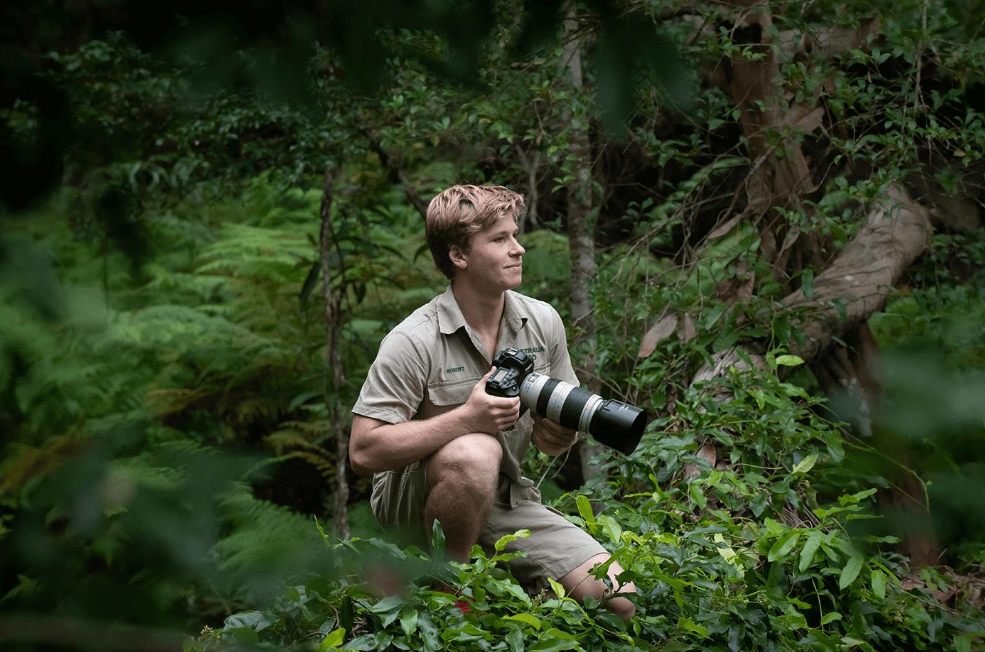
In addition to television, Robert has established himself as a talented wildlife photographer. His work has received international acclaim, highlighting not only his technical skill but also his ability to capture the emotional and ecological significance of animals in their natural environments. Photography has become a powerful extension of his conservation message, allowing him to communicate the importance of biodiversity through visual storytelling.
Public engagement is central to Robert’s influence. Through social media and public appearances, he reaches a younger generation that may not traditionally engage with conservation topics. His communication style—enthusiastic, accessible, and informative—helps bridge the gap between scientific knowledge and public awareness.
Despite his youth, Robert has demonstrated a strong commitment to environmental issues, including habitat protection, species conservation, and climate awareness. His work reflects a broader shift in conservation efforts, where education and outreach are as critical as fieldwork.
At the same time, Robert operates within the expectations tied to his family name. Carrying the legacy of Steve Irwin brings both opportunity and pressure. However, rather than being defined solely by this legacy, Robert has used it as a foundation upon which to build his own contributions.
His career also highlights the evolving role of conservationists in the digital age. Unlike previous generations, Robert’s work is amplified through global platforms, allowing for immediate and widespread impact. This visibility brings both influence and responsibility, as public figures play a key role in shaping environmental discourse.
Ultimately, Robert Irwin represents a new generation of conservation leadership—one that blends tradition with innovation, legacy with individuality, and passion with strategic communication. His continued growth suggests that his influence will extend far beyond his early achievements, positioning him as a long-term advocate for wildlife and environmental sustainability.