

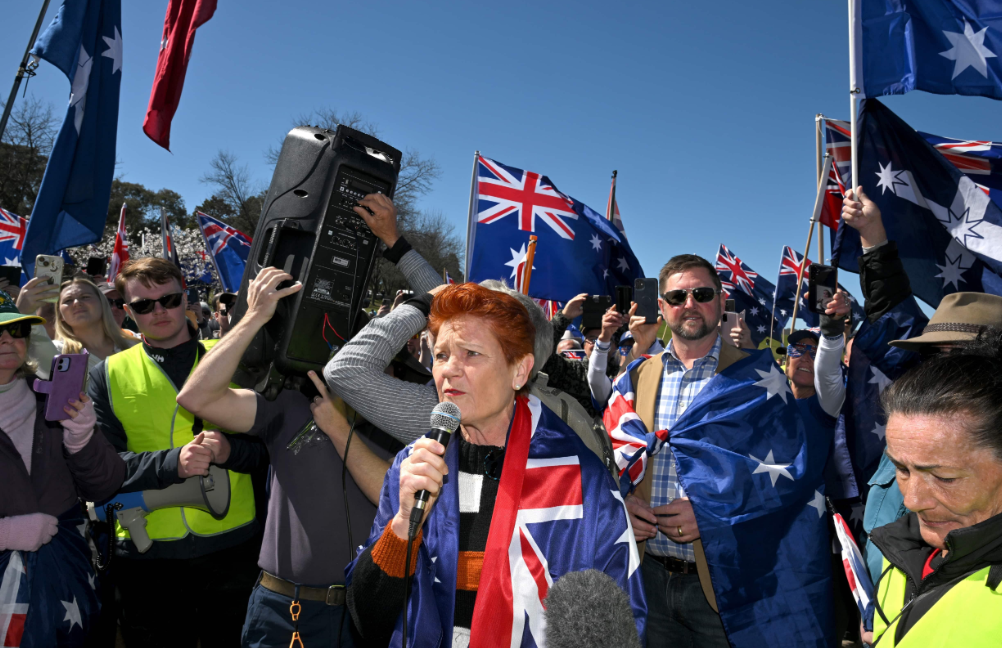
Pauline Hanson has been one of the most polarizing and enduring figures in Australian politics, known for her outspoken views, populist rhetoric, and ability to maintain relevance across decades of political change. Born on May 27, 1954, in Brisbane, Queensland, Hanson’s early life was shaped by working-class experiences that later influenced her political messaging.
Before entering politics, Hanson worked in a variety of roles, including running a fish and chip shop. This background became a central part of her public image, allowing her to present herself as a representative of “ordinary Australians” rather than a career politician. Her entry into politics came in the mid-1990s, a period marked by economic change and shifting national identity debates.
Hanson was first elected to the Australian House of Representatives in 1996 as the member for Oxley. Her maiden speech gained national attention due to its strong stance on immigration and multiculturalism. Shortly afterward, she founded the One Nation party, which positioned itself as a populist alternative to mainstream political parties.
The rise of One Nation reflected broader political trends, including dissatisfaction with established institutions and concerns about globalization. Hanson’s rhetoric often focused on national identity, economic protectionism, and criticism of political elites. These themes resonated with a segment of the electorate, particularly in regional and rural areas.
However, her career has also been marked by significant controversy. Critics have consistently challenged her views, particularly on issues related to immigration, race, and cultural diversity. These controversies have led to intense media scrutiny and have shaped public perception of her as a divisive figure.
Despite political setbacks, including periods outside parliament, Hanson has demonstrated notable resilience. She returned to federal politics in 2016 as a Senator for Queensland, reestablishing her presence on the national stage. This return highlighted her ability to maintain a loyal support base and adapt to changing political conditions.
Hanson’s influence extends beyond electoral success. She has played a role in shaping political discourse in Australia, particularly by bringing certain issues into mainstream debate. Whether viewed positively or negatively, her impact on the political landscape is significant.
Her leadership style is characterized by direct communication and a rejection of traditional political norms. This approach aligns with broader global trends in populist politics, where authenticity and relatability are often emphasized over conventional political decorum.
At the same time, Hanson’s career reflects the challenges of sustaining a populist movement over time. Maintaining relevance requires continuous engagement with evolving issues and voter concerns, as well as navigating internal party dynamics and external criticism.
Her legacy is complex. Supporters view her as a voice for underrepresented communities, while critics see her as a source of division within society. Regardless of perspective, Hanson’s role in Australian politics underscores the importance of understanding the social and economic factors that drive political movements.
Ultimately, Pauline Hanson’s career illustrates the dynamics of modern populist leadership—where influence is shaped not only by policy, but by narrative, identity, and the ability to connect with public sentiment over time.